
The Best Horde Survival Games When You Want to Hold the Line
A guide to the best horde survival games in 2026, from Vampire Survivors to Deep Rock Galactic Survivor, covering every flavor of holding off the endless wave.
Settle in. Tonight we are talking about one of the oldest pleasures in gaming: standing your ground while an absurd number of things try to kill you, and somehow coming out on top. The horde survival game is a broad church, and it has gotten a lot more crowded in the last few years, so let me walk you through the pews.
Here is the loose definition, because "horde survival" covers more ground than people assume. It is any game where the central tension is surviving escalating waves of enemies, whether that means an auto-firing survivors-like, a co-op wave shooter, a base-defense crawler, or something stranger. The common thread is the wave, the mounting pressure, and the question of whether your build, your aim, or your nerves give out first.
This genre overlaps heavily with the survivors-like family, which we cover in depth in our best survivors-like games guide. Think of tonight's list as the wider umbrella that the survivors-like lives under.
Vampire Survivors, the one that started the avalanche
Vampire Survivors is the game that kicked off the modern horde survival genre. It costs about three dollars, uses auto-firing weapons and simple movement controls, and hides genuine build depth beneath its accessible surface. It remains one of the best and most influential survivors-like games you can play in 2026.
Vampire Survivors is the game that made the modern horde survival explosion happen. You walk, your weapons fire automatically, and you survive thirty minutes against a screen-filling tide of monsters while assembling a build that goes from pathetic to apocalyptic. It costs about three dollars and has eaten more collective human hours than games a hundred times its budget.
The genius is the simplicity. The auto-firing means your only job is positioning and build choices, which makes the game accessible to anyone while hiding real depth under the surface. It is the foundation the entire modern genre is built on, and it is still worth playing in 2026.
Deep Rock Galactic: Survivor, the one with a second job
Deep Rock Galactic: Survivor blends horde survival with mineral extraction, creating a dual-objective loop where you fight waves and mine resources simultaneously. PC Gamer scored it 90 out of 100, and its class variety (including the Demolisher from the Heavy Duty Expansion) gives it strategic texture that pure-combat horde games lack.
Deep Rock Galactic: Survivor took the horde survival loop and added mining, which sounds minor and is actually transformative. You fight waves while extracting minerals, and the tension between those two jobs gives the game a strategic texture that pure-combat horde games lack. The class variety keeps it fresh, and the recent Demolisher class from the Heavy Duty Expansion deepened it further.
We dug into what to play around it in our guide to games like Deep Rock Galactic: Survivor. PC Gamer scored it 90 out of 100, and the praise is earned. This is horde survival with a brain.
Halls of Torment, the Diablo-flavored grinder
Halls of Torment fuses the survivors-like wave loop with old-school Diablo aesthetics, dark fantasy visuals, and meaningful itemization. Its trait and item interactions reward systematic experimentation, making it the go-to horde survival pick for players who want loot depth and build-craft layered on top of the wave pressure.
Halls of Torment fuses the survivors-like loop with old-school Diablo aesthetics and itemization, and the result is a horde survival game with surprising build depth. The trait and item interactions reward systematic experimentation, which is why it grew an active tier-list community. We mapped those interactions in our Halls of Torment tier list.
If you like the survivors-like wave pressure but want it dressed in dark fantasy with a loot system that means something, Halls of Torment is the pick.
Risk of Rain 2, horde survival as power fantasy
Risk of Rain 2 merges horde survival with the action roguelite, scaling difficulty against time so relentlessly that even overpowered builds eventually meet their match. Its item-stacking system lets your power compound until you are deleting entire swarms, making it the definitive horde game for players who want a power fantasy with a ticking clock.
Risk of Rain 2 is where horde survival meets the action roguelite, and where the difficulty scales with time so relentlessly that even a god-tier build eventually meets its match. The item-stacking system, which we covered in our Risk of Rain 2 tier list, lets your power compound until you are deleting whole swarms, and then the game throws bigger swarms.
It is the horde survival game for players who want their power fantasy to have a ticking clock attached. The escalation never stops, and that is the appeal.
They Are Billions, the strategic siege
They Are Billions takes horde survival into real-time strategy territory. You build and fortify a colony, then defend it against literal tides of thousands of zombies in set-piece sieges that can undo hours of careful construction in seconds. It is the most nerve-wracking horde game on this list for base-building fans.
They Are Billions takes horde survival in a completely different direction: real-time strategy. You build a colony, fortify it, and hold off a literal tide of thousands of zombies in set-piece sieges that can undo hours of work in seconds. It is tense in a way the action games on this list are not, because the threat is to everything you built rather than a single character.
It belongs on this list because the core fantasy is identical, just expressed through base-building instead of a single avatar. Holding the line has never felt more strategic or more nerve-wracking.
Killing Floor and the co-op wave shooter tradition
The Killing Floor series is the long-running standard-bearer of co-op wave shooters. You and a squad hold off waves of mutants in first person, upgrading loadouts between rounds at the trader. Its survive-then-shop rhythm and team coordination make it the go-to social horde game for FPS players.
For the players who want their horde survival in first person and with friends, the Killing Floor series is the long-running standard-bearer of the co-op wave shooter. You and a squad hold off waves of mutants between trader phases where you upgrade your loadout, and the loop of survive-then-shop is its own satisfying rhythm.
The co-op wave shooter is the social cousin of the solo survivors-like, and it scratches a different itch: the camaraderie of holding a position together while everything goes wrong at once.
20 Minutes Till Dawn, the focused survivor
20 Minutes Till Dawn distills horde survival into a single tight session: survive twenty minutes against escalating Lovecraftian horrors while manually aiming and assembling a synergistic loadout. The manual aiming sets it apart from auto-firing survivors-likes, and its upgrade combinations get deep enough to make well-built runs feel genuinely unstoppable.
20 Minutes Till Dawn takes the horde survival loop and tightens it to a single tense session: survive twenty minutes against escalating Lovecraftian horrors while building a synergistic loadout. The manual aiming sets it apart from the auto-firing crowd, and the upgrade combinations get deep enough that a well-built run feels genuinely unstoppable by the final stretch.
It belongs here because it distills the horde survival fantasy to its most focused form. No sprawling sessions, no bloat, just twenty minutes of mounting pressure and the build you assemble to survive it. The dark mood and the tight runtime make it the perfect pick for a single concentrated dose of the genre.
Soulstone Survivors, the maximalist option
Soulstone Survivors is the horde survival game for players who want the power fantasy cranked to its absolute limit. A deep skill tree fuels late-run screen-clearing spectacle that goes far beyond Vampire Survivors' elegance, piling on abilities until the screen is wall-to-wall destruction. Chasing the most broken build possible is the long-term hook.
Soulstone Survivors is the horde survival game for players who want the power fantasy turned up to its absolute limit. You fight waves of enemies while building from a deep skill tree, and the late-run screen-clearing spectacle is among the most extreme in the genre. Where Vampire Survivors keeps things elegant, Soulstone Survivors goes maximalist, piling on abilities until the screen is wall-to-wall destruction.
It earns its spot for players who want their horde survival loud and overwhelming. The build depth supports the spectacle, and chasing the most broken possible build is the long-term hook that keeps players coming back run after run.
World War Z, the swarm-tech showcase
World War Z delivers genuine technical spectacle to co-op horde survival with its swarm engine, rendering hundreds of zombies climbing over each other in literal human pyramids. Its class progression between missions adds light roguelite-adjacent structure, and holding a chokepoint while a tide of bodies pours over a wall is a spectacle few other shooters can match.
World War Z brought genuine technical spectacle to the co-op horde shooter with its swarm engine, which renders hundreds of zombies climbing over each other in literal human pyramids to reach you. It is the co-op horde game for players who want the wave to feel physically overwhelming, and the class progression between missions gives it light roguelite-adjacent structure.
It belongs on this list as the showcase for what a horde can be when the technology lets it truly swarm. Holding a chokepoint while a tide of bodies pours over a wall is a spectacle few games match, and doing it with friends is the genre at its most social.
Left 4 Dead 2, the co-op horde blueprint
Left 4 Dead 2 defined the modern co-op horde shooter and remains the template more than a decade later. Its AI Director dynamically adjusts swarm intensity based on your team's performance, special infected force real teamwork, and the safe-room-to-safe-room loop is endlessly replayable. It is still one of the best co-op horde experiences available.
Left 4 Dead 2 is the game that defined the modern co-op horde shooter, and more than a decade later it remains the template everyone else copies. Its AI Director dynamically adjusts the intensity of the swarms based on how your team is doing, which means no two runs through a campaign feel quite the same. The special infected force genuine teamwork, and the loop of fighting from safe room to safe room is endlessly replayable.
It belongs here as the foundational text of the co-op horde genre. The dynamic difficulty gives it a roguelite-adjacent unpredictability, and the focus on team coordination makes it the social horde experience against which all others are measured. If you have friends and a free evening, this is still one of the best ways to spend it.
How do you pick the right horde survival game for your playstyle?
The genre splits into distinct playstyle lanes. Solo build-crafters should grab a survivors-like (Vampire Survivors, Halls of Torment, 20 Minutes Till Dawn). Base-building strategists want They Are Billions. Co-op FPS players should pick Killing Floor, World War Z, or Left 4 Dead 2. Match your preferred playstyle to the right lane and you will not bounce off the wrong game.
The genre splits along a few clear lines, and knowing which one you want saves you from bouncing off the wrong game.
| Playstyle | Best Picks | What You Get |
|---|---|---|
| Solo build-crafter (pick up and put down) | Vampire Survivors, Halls of Torment, 20 Minutes Till Dawn | Survivors-like branch with deep upgrade systems to optimize |
| Strategic base-builder | They Are Billions | Siege fantasy with fortification and resource management |
| First-person co-op with friends | Killing Floor, World War Z, Left 4 Dead 2 | Social wave shooters built on coordination and chaos |
| Maximalist power fantasy | Soulstone Survivors, Risk of Rain 2 | Screen-clearing destruction and compounding power loops |
The common thread across all of them is the wave and the mounting pressure, but the way you meet that pressure varies enormously. Solo build-crafters want a deep upgrade system to optimize. Co-op players want coordination and chaos. Strategists want fortification and resource management. Figure out which of those pleasures you are chasing, and the right horde survival game becomes obvious. They are all built on the same primal foundation, just expressed through wildly different mechanics.
Where the wave leads
Every horde survival game on this list shares the same core loop: the wave comes, you hold, and you come out stronger or dead. For the freshest entries in the genre, check our guides to the newest survivors-likes and the best indie roguelites of 2026, which catch the hybrids blending horde survival with everything else.
Every game here is built on the same primal pleasure: the wave comes, you hold, and you come out the other side stronger or dead. If that loop appeals to you, our guide to the new survivors-like games of 2026 covers the freshest entries, and our overview of the best indie roguelites of 2026 catches the hybrids blending horde survival with everything else.
For the players who want to understand the build-craft that makes the solo survivors-like tick, our best survivors-like games guide is the deep dive.
Last call, and a grandmother
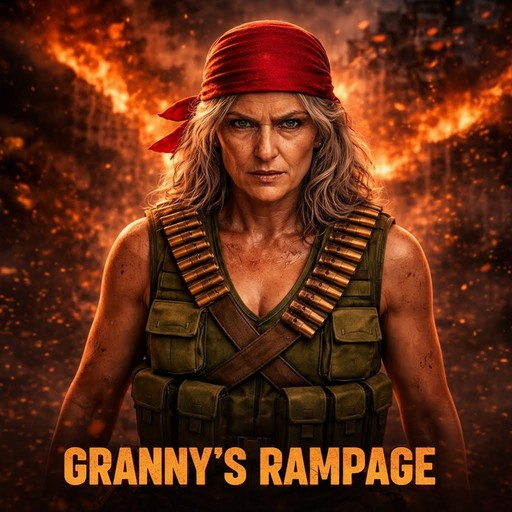
If the holding-the-line fantasy is what you are chasing, Granny's Rampage is a survivors-like where an armed grandmother fights five stages of demonic suburbia with the same wave-survival build-craft that powers every game above. It launched on Steam on June 22, 2026, is on Android now, and ships with zero microtransactions.
If the horde survival fantasy is what brought you in, the holding-the-line-against-impossible-odds feeling, then Granny's Rampage belongs on your radar. It is a survivors-like where an armed grandmother holds the line against five stages of demonic suburbia, with the same wave-survival build-craft that powers the games above. It launched on Steam on June 22, 2026, it is on Android now, and it ships with zero microtransactions.
Horde survival is one of gaming's most durable pleasures because the fantasy is universal. Everyone understands the appeal of standing against overwhelming odds and winning. Whether you want the elegant simplicity of Vampire Survivors, the strategic depth of Deep Rock Galactic: Survivor, the siege tension of They Are Billions, or the co-op chaos of Killing Floor, there is a horde with your name on it. Hold the line. The wave is coming, and that is exactly why you are here.
Frequently Asked Questions
What are the best horde survival games?
The best horde survival games include Vampire Survivors, Deep Rock Galactic: Survivor, Halls of Torment, Risk of Rain 2, They Are Billions, Killing Floor, 20 Minutes Till Dawn, Soulstone Survivors, World War Z, and Left 4 Dead 2. Each offers a different take on the core loop of surviving escalating waves of enemies.
What is the best solo horde survival game?
For solo play, Vampire Survivors is the most accessible and influential pick. Halls of Torment adds Diablo-style loot depth, 20 Minutes Till Dawn offers tight manual-aim sessions, and Deep Rock Galactic: Survivor layers in mining objectives. All four reward build-crafting and can be picked up and put down easily.
What are the best co-op horde survival games?
Left 4 Dead 2 remains the gold standard for co-op horde shooters thanks to its AI Director and team-focused design. Killing Floor offers a wave-based survive-then-shop loop, and World War Z delivers massive swarm spectacle with its unique engine rendering hundreds of zombies at once.
Is Vampire Survivors still worth playing in 2026?
Yes. Vampire Survivors costs about three dollars, features auto-firing weapons with deep build choices, and remains the foundation of the modern survivors-like genre. Its simplicity makes it accessible to newcomers while hiding real depth, and it has consumed more collective hours than games many times its budget.