Best PS1 Games of All Time
The best PS1 games of all time, picked by an indie studio that still steals from them. From RPGs to survival horror to the weird stuff nobody talks about.
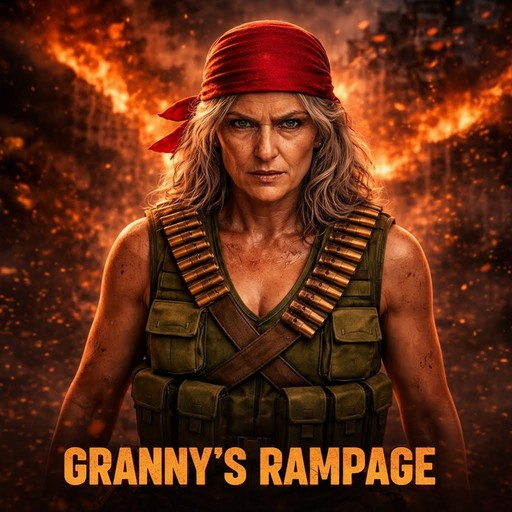
The PlayStation 1 didn't just launch a console generation. It launched an entire design philosophy that we're still borrowing from thirty years later. At Choost Games, we make titles like Granny's Rampage and Granny's Gambit, and honestly, half our design instincts trace straight back to a grey plastic box that read discs at 2x speed.
This is the list we'd hand someone who wanted to understand why the PS1 era mattered. Not just the famous ones. The ones that still hold lessons.
Metal Gear Solid
Metal Gear Solid earns its place among the best PS1 games of all time for pioneering cinematic stealth gameplay. Hideo Kojima blended fourth-wall-breaking moments, codec storytelling, and tight sneaking mechanics into a unified experience that proved video games could deliver movie-quality narrative without ever taking the controller away from the player.
Hideo Kojima figured out something on PS1 that most developers still struggle with: a game can be a movie without stopping being a game. Metal Gear Solid married stealth mechanics to cinematic storytelling in a way that felt genuinely new. The codec calls, the fourth-wall breaks with Psycho Mantis reading your memory card, the way the camera pulled back during the snowfield fight with Sniper Wolf. Every design choice served both the gameplay and the narrative simultaneously.
As a studio, we think about this constantly. How do you make the player feel something without taking the controller away? Metal Gear Solid answered that question before most people were asking it.
Final Fantasy VII
Final Fantasy VII is one of the greatest PS1 RPGs ever made, bringing the JRPG genre to a global mainstream audience. Its flexible materia system, sprawling world map, and masterful pacing through the iconic Midgar opening set the gold standard for blockbuster role-playing games on console and still hold up decades later.
There's no honest PS1 list without it. Final Fantasy VII wasn't the first JRPG, but it was the one that proved the genre could carry a blockbuster budget and a global audience. The materia system gave players enough rope to build wildly different party configurations. The world map made Gaia feel enormous at a time when most RPGs were corridor-and-town affairs.
What holds up beyond the nostalgia is the pacing. Midgar alone is a masterclass in escalation. You start as a mercenary blowing up a reactor and end that opening act watching an entire city sector get dropped on a slum. If you're into the RPG lineage the PS1 built, our best retro games roundup covers the broader picture.
Castlevania: Symphony of the Night
Castlevania: Symphony of the Night ranks among the best PS1 games as the title that defined the Metroidvania genre. Its RPG progression layered over platforming, vast weapon variety, fluid movement, and the legendary inverted castle twist deliver a blueprint that every action-platformer in the genre's lineage has followed since.
Symphony of the Night invented a genre and then named it. The inverted castle twist doubled the game's content in a way that felt like a secret rather than padding. Alucard's movement, the RPG progression layered over platforming, the familiars, the absurd weapon variety. It's the game that made "Metroidvania" mean something, and every game in that lineage since owes it rent.
We've written about that lineage in our best metroidvania games post, but Symphony is where the whole conversation starts.
Resident Evil 2
Resident Evil 2 stands as one of the top PS1 games for refining survival horror into something elegant. Its dual A/B scenario system with Leon and Claire, deliberately composed fixed camera angles, and the haunting Raccoon City Police Department setting elevated the genre well beyond cheap jump scares into genuine, atmospheric dread.
The original Resident Evil proved survival horror worked. Resident Evil 2 proved it could be elegant. The A/B scenario system with Leon and Claire gave the game genuine replay structure. The Spencer Mansion was creepy; the Raccoon City Police Department was terrifying and sad. You felt the weight of a city that had already lost.
Fixed camera angles get mocked now, but they were a deliberate design tool. Every angle in RE2 was composed like a shot in a horror film, controlling what you could see and what you couldn't. That's not a limitation. That's direction.
Silent Hill
Silent Hill is one of the best PS1 horror games for proving that atmosphere alone can be scarier than any monster. Its iconic fog, oppressive radio static, and creeping psychological ambiguity turned the console's hardware limitations into a defining aesthetic that reshaped how developers approach horror game design to this day.
Where Resident Evil scared you with things jumping out of closets, Silent Hill scared you with fog and radio static and the growing suspicion that the town itself was wrong. The PS1's hardware limitations became the aesthetic. Draw distance was short, so everything beyond ten feet dissolved into grey nothing. That wasn't a bug. That was the entire mood.
Silent Hill proved that atmosphere could carry a horror game harder than any monster design. If you want more in this vein, our best survival horror games list goes deep.
Crash Bandicoot: Warped
Crash Bandicoot: Warped is one of the best PS1 platformers, representing Naughty Dog at the peak of their original formula. Time-travel themed levels, vehicle stages, unlockable abilities, and razor-tight time trials all built on the series' core run-into-the-screen design to deliver the definitive Crash experience on PlayStation 1.
The third Crash game is where Naughty Dog perfected the formula. Warped added enough variety with its time-travel levels, vehicle stages, and unlockable abilities to keep the platforming from going stale, while the core run-into-the-screen design stayed razor tight. The time trials gave it legs well past the story credits.
It's also a case study in how to do a sequel right. Don't rebuild everything. Take what works, sand the rough edges, add one or two new dimensions. We think about that a lot at Choost when we're deciding what carries forward between projects.
Spyro: Year of the Dragon
Spyro: Year of the Dragon is the most content-packed platformer on PS1. Insomniac filled it with sprawling worlds, varied minigames, alternate playable characters, and hidden collectibles that reward genuine exploration. Its movement physics remain remarkably smooth, making it a standout 3D platformer that holds up better than most modern entries in the genre.
Insomniac's third Spyro is the most generous PS1 platformer ever made. The sheer density of content across its worlds, the minigames, the alternate playable characters, the hidden eggs. It respected the player's time by making every collectible feel like a discovery rather than a checklist. The movement physics still feel better than most modern 3D platformers, which says something uncomfortable about where the genre went after this.
Tekken 3
Tekken 3 is widely considered the best fighting game on PS1. Its deep roster, mechanics that reward both casual button-mashers and competitive lab monsters, and bonus modes like Tekken Force and Tekken Ball gave it lasting appeal that made the PlayStation the definitive console for tournament-level fighters in the late '90s.
The fighting game that made the PS1 the tournament console. Tekken 3's roster was deep, its mechanics rewarded both button-mashers and lab monsters, and its side modes (Tekken Force, Tekken Ball) gave it a casual longevity that pure fighters rarely achieve. If you're into the competitive side, our best fighting games roundup covers the modern landscape.
Gran Turismo 2
Gran Turismo 2 is one of the best racing games on PS1, featuring over 600 cars and 27 tracks with none of it feeling like filler. Polyphony Digital's sequel proved simulation racing could be a mainstream genre, with a rewarding license progression system and an addictive car-collecting loop that kept players hooked for hundreds of hours.
Polyphony Digital's sequel had over 600 cars and 27 tracks and somehow none of it felt like filler. GT2 was the game that proved simulation racing could be a mainstream genre, not a niche for gearheads. The license system that gated progression felt earned rather than punishing. Collecting cars was genuinely addictive in a way that predated the loot-loop era by a decade.
Tony Hawk's Pro Skater 2
Tony Hawk's Pro Skater 2 is one of the greatest PS1 games because its mechanics, level design, soundtrack, and meta progression all peak at the same time. The two-minute run structure made it infinitely replayable, the park editor pioneered user-generated content on console, and its deep trick system still powers an active competitive scene.
THPS2 is one of those rare games where the mechanics, the level design, the soundtrack, and the meta progression all peak at the same time. The two-minute run structure made it infinitely replayable. The park editor gave it user-generated content before that was a buzzword. And the trick system was deep enough that the competitive scene is still active.
PaRappa the Rapper
PaRappa the Rapper is one of the most unique PS1 games, giving rhythm games a bold personality all their own. Its paper-thin art style, absurd song scenarios (learning karate, getting a driver's license, baking a cake), and deceptively punishing timing windows proved that a game's aesthetic identity could be its strongest selling point.
PaRappa didn't invent rhythm games, but it gave them personality. The paper-thin art style, the absurd song scenarios (learning karate, getting a driver's license, baking a cake), and the surprisingly punishing timing windows made it something completely unlike anything else on the shelf. It proved that a game's aesthetic identity could be its primary selling point.
Honorable Mentions
Beyond the main list, several PS1 titles deserve recognition for pushing the console's boundaries in their own ways. Vagrant Story, Ape Escape, Mega Man Legends, Wipeout XL, and Dino Crisis each brought something groundbreaking to the platform, from innovative combat systems to pioneering controller requirements and bold genre experiments.
| Game | Why It Deserves a Mention |
|---|---|
| Vagrant Story | The combat system was ten years ahead of its time |
| Ape Escape | First game to require the DualShock |
| Mega Man Legends | 3D Mega Man that actually worked |
| Wipeout XL | The game that made PlayStation cool |
| Dino Crisis | Resident Evil but with raptors, which is exactly as good as it sounds |
Why does the PS1 era still matter for game design?
The PS1 generation matters because its developers solved foundational problems in 3D storytelling, horror design, and world-building under severe hardware constraints. The creative solutions they found, from atmosphere-driven horror to cinematic stealth gameplay, still shape how both indie and AAA studios approach game design today.
The PS1 generation was defined by studios figuring things out for the first time. How do you tell a story in 3D? How do you make horror work without high-fidelity graphics? How do you build a world that feels bigger than the hardware can actually render? The answers they found still show up in how games are designed today.
At Choost, we build games like Granny's Rampage with the same mentality: work within your constraints, make every design choice intentional, and trust the player to meet you halfway. The PS1 devs didn't have the luxury of brute-forcing problems with hardware. Neither do indie studios. That's why the lessons still land.
If you want to keep exploring the retro era, our posts on the best N64 games, best SNES games, and best GBA games cover the rest of the golden age.
Frequently Asked Questions
What are the best PS1 games of all time?
The best PS1 games of all time include Metal Gear Solid, Final Fantasy VII, Castlevania: Symphony of the Night, Resident Evil 2, Silent Hill, Crash Bandicoot: Warped, Spyro: Year of the Dragon, Tekken 3, Gran Turismo 2, Tony Hawk's Pro Skater 2, and PaRappa the Rapper. Each title defined or redefined its genre on PlayStation 1.
What is the best RPG on PS1?
Final Fantasy VII is widely regarded as the best RPG on PS1. Its materia customization system let players build wildly different party configurations, its world map made Gaia feel enormous, and the Midgar opening remains a masterclass in pacing and escalation that set the standard for console RPGs.
What are the best horror games on PS1?
Resident Evil 2 and Silent Hill are the top horror games on PS1. RE2 refined survival horror with its dual Leon/Claire scenario system and composed fixed camera angles. Silent Hill pioneered atmospheric psychological horror, turning hardware limitations like short draw distance into its defining foggy aesthetic.
What are the best PS1 platformers?
Crash Bandicoot: Warped and Spyro: Year of the Dragon are the best PS1 platformers. Crash Warped perfected Naughty Dog's formula with time-travel levels and time trials, while Spyro 3 packed in sprawling worlds, minigames, alternate characters, and movement physics that still feel smooth today.