Indie Horror Games That Will Genuinely Mess With Your Head
The best indie horror games, from psychological terror to co-op chaos. These are the ones that stick with you after you close the game.
Horror is the genre where indie developers consistently outperform major studios. The reason is structural: horror works best when it's personal, weird, and willing to break conventions. A team of 200 people making decisions by committee will sand down every rough edge until the horror becomes predictable. A solo developer with a specific nightmare they want to share will make something that gets under your skin in ways focus-tested horror never can.
The games below aren't ranked. Horror is too subjective for that. But they're all games that did something memorable enough that you'll still be thinking about them days after you put them down.
What are the best psychological indie horror games?
The best psychological indie horror games include Inscryption, Devotion, Omori, and Anatomy. These titles rely on atmosphere, emotional weight, and creeping unease rather than jump scares, using themes like trauma, grief, and domestic horror to get inside your head and stay there long after the credits roll.
Inscryption earns its horror not through jump scares but through atmosphere and escalating wrongness. You're sitting across from a figure in a dark cabin, playing a card game. The stakes feel real even though they shouldn't. And then the game starts doing things that games aren't supposed to do, and the wrongness compounds until you're not entirely sure what you're playing anymore. Daniel Mullins made something that uses the medium of video games as the horror delivery system, not just the setting.
Devotion by Red Candle Games is a first-person horror game set in a Taiwanese apartment across multiple time periods. The horror builds through domestic details (a family falling apart, religious desperation, mental illness) and the scares come from recognizing how ordinary the path to tragedy can be. It was pulled from Steam due to political controversy, which makes it harder to find, but it's one of the most emotionally devastating horror games ever made.
Omori looks like a cute RPG with pastel colors and charming characters. It is not a cute RPG. The game deals with depression, grief, and trauma through a dual-world structure where the cheerful surface gradually cracks to reveal something much darker underneath. The emotional gut punches hit harder because the game earns your trust before it breaks it.
Anatomy by Kitty Horrorshow costs a few dollars and takes about thirty minutes to play. It's a game about a house. Just a house. You walk through rooms and listen to audio cassettes that describe what each room represents in terms of the human body. It's one of the most unsettling experiences in gaming, and it achieves this with nothing but architecture, audio, and implication. No monsters. No jump scares. Just a house that feels increasingly wrong.
What are the scariest indie horror games?
The scariest indie horror games include Lethal Company, Phasmophobia, Iron Lung, and Buckshot Roulette. These games deliver raw, genuine fear through claustrophobia, voice-activated ghost interactions, co-op panic, and stripped-down tension mechanics that make your heart pound in ways big-budget horror rarely manages.
Lethal Company isn't marketed as horror, but it absolutely is. Zeekerss built a co-op game about scavenging abandoned moons for a faceless corporation, and the monsters that inhabit those moons range from "kind of funny" to "genuinely nightmare-inducing." The Bracken stalking you through dark corridors, the Coil-Head that moves only when you're not looking at it. These are designed to create authentic fear responses. The co-op element makes it bearable, and the comedy of watching your friends die in stupid ways provides relief between the genuine scares.
Phasmophobia turned ghost hunting into a cooperative investigation game and accidentally became one of the most popular horror games on Steam. Kinetic Games built a system where the ghost responds to your voice through your microphone, which means you're genuinely talking to something in a dark room and waiting for it to answer. That interaction design is terrifyingly effective. The game has evolved enormously since launch, with new ghost types, maps, and equipment continually raising the bar.
Iron Lung is a game where you pilot a submarine through an ocean of blood on a dead moon, using only a low-resolution camera to navigate. You never see what's outside. You hear things. The camera shows you shapes in the murky red. David Szymanski made a game that's ninety minutes long and uses claustrophobia and imagination more effectively than most horror games use their entire monster bestiary.
Buckshot Roulette is horror stripped to its absolute minimum. You're playing Russian roulette with a shotgun against a dealer in a grimy bathroom. The sound design is impeccable: the pump action, the trigger pull on an empty chamber, the dealer's movements. Mike Klubnika turned a simple gambling mechanic into genuine dread.
What are the weirdest indie horror games?
The weirdest indie horror games include Cruelty Squad, Faith: The Unholy Trinity, World of Horror, and Doki Doki Literature Club. These titles use deliberately ugly aesthetics, retro pixel art, 1-bit visuals, and genre subversion to deliver horror experiences that feel genuinely unhinged and unlike anything else in gaming.
Cruelty Squad looks like a fever dream rendered in Microsoft Paint and plays like a tactical shooter designed by someone having a breakdown about late-stage capitalism. Consumer Softproducts made a game that's deliberately ugly, deliberately hostile, and deliberately brilliant. The stock market mechanic, the organ harvesting, the grappling hook made of intestines. It's horror through aesthetic assault and satirical excess.
Faith: The Unholy Trinity uses Atari-era pixel graphics to tell a story about demonic possession in rural America, and it's more frightening than games with photorealistic graphics and million-dollar budgets. The rotoscoped cutscenes, the text-to-speech voice acting, and the minimal pixel art combine to create something that feels like a cursed artifact rather than a commercial product.
World of Horror draws from the cosmic horror of Junji Ito and H.P. Lovecraft, rendered in 1-bit art that looks like it was made in Microsoft Paint (it was). Panstasz created a roguelike adventure game where every investigation into supernatural events in a small Japanese town drains your stamina, reason, and will to continue. The art style shouldn't work for horror. It works incredibly well.
Doki Doki Literature Club is a visual novel about a high school poetry club that is absolutely, categorically not what it appears to be. Team Salvato made a game that weaponizes the expectations of its genre against the player. It's free, it takes a few hours, and going in blind is essential. If someone has already spoiled it for you, it still has impact, but the unspoiled experience is one of the most memorable in gaming.
What we make at Choost
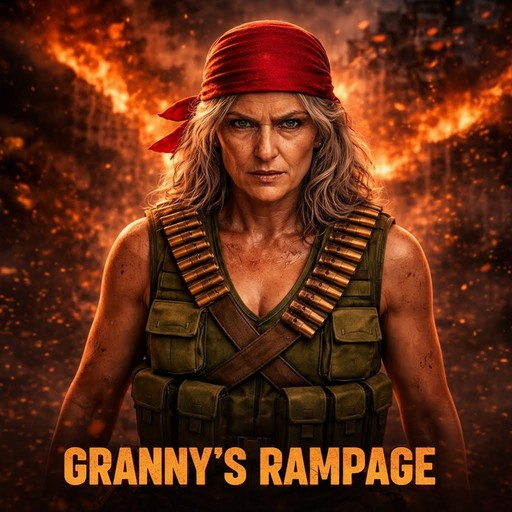
Choost Games is a small indie studio behind Granny's Rampage, a bullet heaven where grandma fights through hell with a minigun, and Granny's Gambit, a Victorian deckbuilder roguelike. Both games blend action with horror-adjacent aesthetics and over-the-top personality.
We're a small indie studio. Our games: Granny's Rampage, a bullet heaven where grandma grabs a minigun and fights through hell, and Granny's Gambit, a Victorian deckbuilder roguelike starring a card-slinging nan with a chip on her shoulder. Granny's Rampage is $2.99 on itch (Windows) and free on Google Play (Android), and on Steam since June 22 (also $2.99). Granny's Gambit is pay-what-you-want on itch.
Why are indie horror games better than AAA horror?
Indie horror games often outperform AAA horror because the genre's core needs (dark environments, minimal mechanics, strong atmosphere) are cheap to build but hard to design by committee. Small teams deliver a personal, specific vision that creates the kind of unpredictable, skin-crawling dread that focus-tested studio horror struggles to match.
The economics of horror favor small teams. You don't need expensive environments. A dark hallway is cheap to render and terrifying to walk through. You don't need complex combat systems. Running and hiding is mechanically simple and emotionally intense. You don't need voice acting for a hundred characters. Silence and ambient sound design are often more effective than dialogue.
More importantly, horror benefits from authorial voice in ways that most genres don't. The scariest games feel like they came from a specific person's imagination, not a design document approved by a committee. When Kitty Horrorshow makes a game about a house that feels wrong, the wrongness is specific and personal. When a major studio makes a horror game, the scares feel engineered. Both can work, but the indie version gets under your skin differently.
The indie horror scene is also where some of the most interesting genre-blending happens. Bullet heavens and deckbuilders are both absorbing horror aesthetics. Games like Halls of Torment bring gothic horror atmosphere to the survivors-like formula, and Inscryption wraps a deckbuilder in a horror narrative. Even Granny's Rampage pulls from horror imagery: five stages of hellish landscapes filled with monstrous hordes aren't exactly cozy. The boundaries between genres keep blurring, and horror keeps finding new forms to inhabit.
If you've been sleeping on indie horror because you think it's all Five Nights at Freddy's clones, you're missing out on some of the most creative, disturbing, and memorable games being made right now. The best indie horror doesn't just scare you. It makes you uncomfortable in ways you didn't know a game could.
Frequently Asked Questions
What are the best indie horror games to play right now?
Some of the best indie horror games include Inscryption, Devotion, Omori, Lethal Company, Phasmophobia, Iron Lung, Buckshot Roulette, Cruelty Squad, Faith: The Unholy Trinity, World of Horror, Anatomy, and Doki Doki Literature Club. They span psychological horror, co-op scares, and experimental weirdness, and most are available on Steam or itch.io.
What indie horror games can I play with friends?
Lethal Company and Phasmophobia are the standout co-op indie horror games. Lethal Company has you scavenging abandoned moons with terrifying monsters, while Phasmophobia uses your microphone for voice-activated ghost hunting. Both blend genuine scares with the comedy of watching your squad panic.
Are there short indie horror games worth playing?
Yes. Anatomy by Kitty Horrorshow takes about thirty minutes and costs a few dollars on itch.io. Iron Lung by David Szymanski runs about ninety minutes. Buckshot Roulette is also a short, intense experience. All three deliver memorable horror in a single sitting.
What indie horror game looks cute but is actually terrifying?
Omori and Doki Doki Literature Club both disguise genuine horror under cheerful surfaces. Omori looks like a pastel RPG but deals with depression, grief, and trauma. Doki Doki Literature Club presents itself as a lighthearted visual novel before subverting its own genre in deeply unsettling ways.