Stop Killing Games Is Winning, and Indie Roguelites Were Never the Problem
Stop Killing Games is winning, UFC lawsuit against Ubisoft, 1.4M EU petition signatures, Ubisoft adding offline modes. Indie roguelites were never the games doing the killing.
The Stop Killing Games movement has had the kind of year most consumer advocacy campaigns never get. On March 31, 2026, French consumer rights group UFC-Que Choisir filed a formal lawsuit against Ubisoft over The Crew shutdown. In April 2026, the movement announced support for California's Protect Our Games Act. The European Citizens' Initiative petition has cleared 1.4 million signatures, which means the EU Commission must formally respond by mid-2026. Ubisoft has already started adding offline modes to The Crew 2 and Motorfest under pressure from the movement.
The shutdowns keep coming. Anthem went dark January 12, 2026. Highguard from Wildlight launched in late January 2026 with 100,000 peak concurrent users and shut down March 12 after Tencent pulled funding. The Cube, Save Us launched March 17 and shut down May 8. Concord was shut down 11 days after launch in late 2024 and took Firewalk Studios with it. Bluepoint Games was shut down by Sony in March 2026 after years of acclaimed remake work.
The Stop Killing Games movement, founded by Ross Scott in April 2024 after Ubisoft killed The Crew, is exactly the kind of consumer rights campaign the games industry has needed for fifteen years. It is also exactly the kind of campaign that does not affect the indie roguelite scene at all, because indie roguelites were never the games doing the killing.
This is a guide to what Stop Killing Games is actually fighting for, why the indie genres we cover at Choost have been structurally immune to the preservation problem, and what the movement's continued momentum means for the future of the games industry.
What Does Stop Killing Games Actually Want?
Stop Killing Games demands that publishers either keep purchased games playable after ending official support or release the tools so players can do it themselves. The movement uses consumer protection law, citizen petitions, and targeted legislation like California's Protect Our Games Act to force publishers to stop revoking access to games people paid for.
The movement's core demand is that publishers be required to keep purchased games playable, or release the tools to keep them playable, after deciding to discontinue official support. The mechanism for enforcement varies by jurisdiction. In Europe, it is the European Citizens' Initiative and consumer protection law. In the United States, it is bills like the California Protect Our Games Act. In France specifically, it is the UFC-Que Choisir lawsuit against Ubisoft, which could set precedent for "always-online" games industrywide.
The trigger event was The Crew. Ubisoft sold approximately 12 million copies of the racing game. On March 31, 2024, Ubisoft shut down the servers. The game became unplayable for everyone who had bought it, including players with physical discs. Ubisoft offered refunds for "recent" purchases, with the time window undefined. In April 2024, Ubisoft began revoking licenses entirely.
Ross Scott launched the Stop Killing Games campaign on April 1, 2024, the day after the servers went dark. The campaign has since become the largest consumer rights movement in gaming history. Ross Scott's previous body of work was Freeman's Mind, a Half-Life-based machinima series. He had been talking about game preservation for years before the The Crew shutdown gave him a concrete moment to organize around.
The industry response has been mixed. Some publishers have quietly added offline modes or extended server lifetimes. Ubisoft's CEO Yves Guillemot publicly said games are not "meant to last forever" and that "nothing is eternal," which became a rallying cry for the movement. Video Games Europe, the EU lobbying association, has called the movement's proposals "prohibitively expensive" for developers. The Entertainment Software Association strongly opposed the California Protect Our Games Act.
The movement keeps winning anyway. The momentum is real. The legal precedents are starting to land. The industry will be forced to change.
Why Aren't Indie Roguelites Affected by Stop Killing Games?
Indie roguelites are structurally immune to the game-killing problem because they are almost entirely single-player, offline-capable, and sold as one-time purchases with no server dependency. Games like Vampire Survivors, Balatro, Hades, and Dead Cells can be installed and played forever without phoning home to a publisher's servers.
The Stop Killing Games movement is fundamentally about online-only games and live service titles, which are structurally vulnerable to server shutdowns. Single-player games with offline modes are not the target, because they cannot be killed by the publisher in the same way. You can install them once and play them forever, or at least until your hardware dies.
The indie roguelite genre is almost entirely single-player and almost entirely offline-capable. Vampire Survivors plays offline. Balatro plays offline. Slay the Spire plays offline. Hades and Hades 2 both play offline. Dead Cells plays offline. The genre's commercial mainstays are all structured around the assumption that the player owns the game and can play it whenever they want, indefinitely, without needing to phone home to a publisher's servers.
This is not a coincidence. The genre's design philosophy explicitly rejects the live service model. Procedural generation, run-based structure, and finite progression are all systems that work better without server dependencies. The audience that has flocked to roguelites over the last five years has implicitly been voting against the always-online model that Stop Killing Games is now trying to legally prohibit.
The platform infrastructure also matters. itch.io is the indie storefront most resistant to digital preservation problems. Many games on itch are sold as direct downloads, often DRM-free, often without any kind of server requirement. GOG takes the same approach for its catalog. Steam allows games to be configured for offline play, and most indie roguelites are. The infrastructure that hosts the genre is largely preservation-friendly by design.
| Storefront | DRM-Free | Direct Downloads | Offline Play Support | Preservation-Friendly |
|---|---|---|---|---|
| itch.io | Yes, often | Yes | Yes | Most resistant to preservation problems |
| GOG | Yes, always | Yes | Yes | Fully preservation-friendly by policy |
| Steam | Not by default | No (client required) | Configurable per game | Most indie roguelites support offline play |
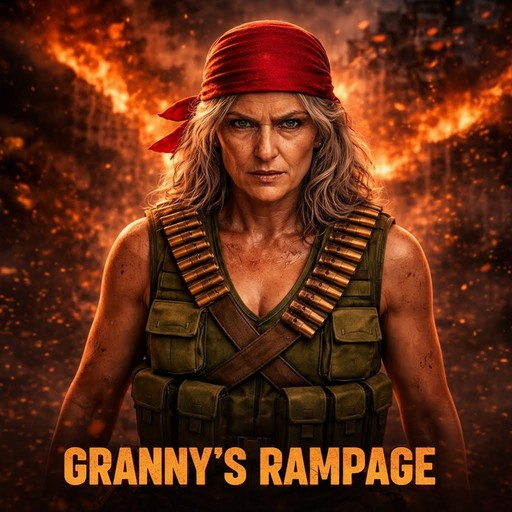
Granny's Rampage is a good example of how the model works in practice. The game is currently on Android and itch.io, with a Steam release scheduled for June 22, 2026. It is single-player. It is offline. There are no servers to shut down. There is no live service component. Buy it once and you can play it forever, as long as you have hardware that runs it. The model is structurally immune to the Stop Killing Games concerns because the model never depended on what Stop Killing Games is trying to outlaw.
Which Games Will Stop Killing Games Actually Affect?
The movement's legal push primarily targets online-only single-player games, live service titles with no offline mode, always-online MMOs, looter shooters, and mobile games requiring persistent server connections. Major publishers like Ubisoft, EA, and Activision Blizzard, whose business models depend on recurring online revenue, face the most exposure.
The Stop Killing Games movement's enforcement will primarily affect a specific category of games. Online-only single-player games like The Crew. Live service titles with no offline mode. Always-online MMOs and looter shooters. Mobile games that require persistent server connection. The category overlaps heavily with the live service collapse we covered in our analysis of how indie roguelites are eating live service's lunch.
The publishers most affected are the ones who built their business models around recurring revenue from online services. Ubisoft, EA, Activision Blizzard, and the live-service-focused divisions of Sony, Microsoft, and Nintendo. The indie publishers building offline single-player games have minimal exposure to the legal changes coming, because they were already operating within the model the movement is trying to codify.
Take-Two Interactive is an interesting case. The publisher owns Rockstar Games, which operates GTA Online and Red Dead Online. Both games will eventually be shut down. The Stop Killing Games movement is partly aimed at forcing publishers like Take-Two to have a preservation plan when those shutdowns happen, rather than simply revoking access to games players have purchased.
For broader context on the roguelike-roguelite distinction and where the genre sits in the broader landscape, the run-based formats we cover are mostly outside the live-service-vs-preservation debate. The genre's commercial energy has been moving in the opposite direction from live service for years.
Why Does Stop Killing Games Matter for Indie Players?
Even if you only play offline indie roguelites, the legal precedents Stop Killing Games is setting will shape what business models publishers can use, what consumer rights players have, and whether games are treated as owned products or revocable licenses. A win here makes the indie buy-once-own-forever model the legal standard, not just a genre quirk.
If you only play indie roguelites and offline games, the Stop Killing Games movement might seem like someone else's fight. It is not. The legal precedents being set right now will affect what kinds of games can exist in the future, what kinds of business models publishers can operate, and what kinds of consumer rights players can expect.
The principle Stop Killing Games is establishing is that selling someone a game grants them ownership rather than a revocable license. This principle, if it becomes law in multiple major markets, will reshape the industry in ways that benefit every player, including indie players. Publishers will be forced to think harder about server dependencies. Studios will be forced to plan for end-of-life support. Players will be able to keep what they buy.
This is good for indie developers too. The model that funds most indie roguelites is one-time purchase at sustainable prices. The model that the live service industry has been pushing for fifteen years is recurring revenue from rentable licenses. The Stop Killing Games movement's success makes the indie model more defensible legally and culturally, even if the indie model was never under direct legal threat.
The other reason this matters for everyone is preservation. Games are art and culture. The current industry practice of shutting down games and rendering them permanently unplayable is the equivalent of movie studios burning their films. Ross Scott has explicitly drawn this comparison, and it is the right one. The medium deserves better than what publishers have been doing to it.
What's Next for the Stop Killing Games Movement?
Three major developments are expected in the next twelve months: the EU Commission's required response to the 1.4 million signature petition, the UFC-Que Choisir lawsuit ruling against Ubisoft in French courts, and the California Protect Our Games Act's path through the state legislature. Each outcome could set binding precedent for game preservation law.
The next twelve months will probably see significant movement in three areas.
The European Commission's response to the 1.4 million signature petition is required by mid-2026. The response will determine whether EU consumer protection law gets formally extended to game preservation. This is the single biggest event in the movement's near future.
The UFC-Que Choisir lawsuit against Ubisoft over The Crew shutdown is moving through French courts. A ruling for the plaintiffs would set precedent for similar cases across the EU and potentially globally. A ruling against would slow the movement but not stop it.
The California Protect Our Games Act needs to pass through the state legislature. California has a long history of consumer protection laws affecting tech industries, and a bill passing in California often becomes de facto national law because of California's market size. Industry lobbying against the bill is intense.
The shutdowns will keep happening regardless. Live service games will keep failing. Server-only single-player games will keep dying. The question is whether legal protections will be in place to ensure publishers cannot just walk away from products they sold.
Meanwhile, in the indie scene we cover, the auto-shooter genre and other roguelite categories will keep producing games that respect the preservation principles Stop Killing Games is trying to codify. The indie tier was always doing it right. The legal frameworks catching up to the indie standard is a good thing for everyone, even players who only play indie games.
If you want to support the movement specifically, the official Stop Killing Games site has resources, petitions, and ways to contact your local representatives. If you want to support preservation through your buying habits, itch.io and GOG are the storefronts most aligned with the principles the movement is fighting for. If you want to support indie developers building preservation-friendly games, the genre we cover at Choost is full of them.
Ross Scott started this movement two years ago because Ubisoft killed a racing game. The fact that a single YouTuber organizing on principle has brought multiple major publishers to court and threatened legislation across two continents is one of the more remarkable consumer rights stories in recent history. The momentum is real. The win condition is becoming clearer. The industry will have to change.
Indie roguelites will keep being immune to the problem because indie roguelites never created the problem. That is part of why the genre is having its best commercial run in history. Players are quietly choosing the games that respect ownership. Stop Killing Games is just trying to make that choice the legal default rather than a happy accident.
The broader cultural shift matters too. Players have started thinking about ownership and preservation more seriously than they did five years ago. The Stop Killing Games movement did not invent these concerns. It crystallized them into a coherent campaign with specific legal demands. The conversation about what it means to own a game has moved from gaming forums into mainstream press, into European parliamentary debate, and into California state legislation. The frame has shifted permanently. Even if the specific legal demands fail to pass, the cultural expectation has changed. Publishers know that "nothing is eternal" is no longer an acceptable answer to customers who paid for the product. The next time a major publisher tries to shut down a beloved game, the response will be louder, faster, and more organized than ever before.
Frequently Asked Questions
What is the Stop Killing Games movement?
Stop Killing Games is a consumer rights campaign founded by Ross Scott in April 2024 after Ubisoft shut down The Crew. It demands that publishers keep purchased games playable or release the tools for players to do so after official support ends. The movement's European Citizens' Initiative petition has cleared 1.4 million signatures.
Are indie roguelites affected by Stop Killing Games?
No. Indie roguelites like Vampire Survivors, Balatro, Hades, Slay the Spire, and Dead Cells are single-player and offline-capable with no server dependency. They cannot be 'killed' by a publisher shutting down servers, so the movement's legal demands do not target them.
Which games and publishers will Stop Killing Games affect?
The movement primarily targets online-only single-player games, live service titles, always-online MMOs, and mobile games requiring persistent server connections. Publishers most affected include Ubisoft, EA, Activision Blizzard, and the live-service divisions of Sony, Microsoft, and Nintendo.
What is the California Protect Our Games Act?
The California Protect Our Games Act is a state bill supported by the Stop Killing Games movement that would legally require publishers to keep sold games playable or provide preservation tools after ending support. If passed, California's market size could make it a de facto national standard.