Vampire Survivors vs Brotato: Which Should You Buy First?
Vampire Survivors or Brotato? A clear breakdown of the two biggest survivors-likes to help you decide which one to buy first based on how you like to play.
Pull up a stool. You have a simple question with a surprisingly real answer: Vampire Survivors or Brotato? They are the two giants of the survivors-like genre, they cost about the same pocket change, and people throw them around as if they were interchangeable. They are not, and which one you should buy first depends entirely on how you like to play. Let me walk you through it so you spend your few dollars wisely.
First, the common ground, because it is worth being clear about why these two get compared constantly. Both are survivors-likes, the genre where you fight escalating waves of enemies while assembling a build that takes you from fragile to overwhelming. Both are cheap, both are deep, both are wildly replayable, and both are excellent. You will not regret either purchase. For the broader genre context, our best survivors-like games guide covers the whole field. But the differences between these two are sharp, and they matter.
What is the core difference between Vampire Survivors and Brotato?
Vampire Survivors is a positioning game where auto-firing weapons reward spatial awareness across continuous 30-minute runs. Brotato is a building game where short waves and shop phases between them reward optimization and synergy-hunting. Both are survivors-likes, but Vampire Survivors leans meditative while Brotato leans strategic.
Vampire Survivors is about positioning. Brotato is about building. That is the whole comparison in miniature, and everything else flows from it.
In Vampire Survivors, your weapons fire automatically and the gameplay is almost entirely about where you move. You weave through the horde, you let your weapons do the work, and your build comes together through which weapons and passives you pick up across a thirty-minute run. The skill is spatial. The pleasure is watching the screen slowly fill with your own destruction as a build snowballs.
In Brotato, the runs are shorter, structured as discrete waves with a shop between each one, and the gameplay is far more about the build decisions you make in that shop. You play a potato wielding up to six weapons at once, and the interaction between characters, weapons, and items is where the depth lives. The skill is optimization. The pleasure is assembling a synergistic loadout and watching it carve through a wave.
When should you buy Vampire Survivors first?
Buy Vampire Survivors first if you want a relaxing, meditative on-ramp to the survivors-like genre. Its auto-firing weapons, sprawling content with hidden unlocks, and gentle default difficulty make it ideal for newcomers, decompression sessions, or anyone who prefers positioning over shop management.
You want the purest, most relaxing version of the genre. Vampire Survivors is the better on-ramp, the more meditative experience, and the one that asks less of you moment to moment. The auto-firing means you can zone out and let the build snowball, which is exactly what a lot of people want from the genre. It is also the cheaper of the two, often by a hair, and it has more raw content sprawl with its many stages, characters, and hidden unlocks.
It is the right first buy if you have never played a survivors-like, if you want something to decompress with, or if the idea of managing a shop between waves sounds like work rather than fun. It is the genre's comfort food, and it earns that title.
When should you buy Brotato first?
Buy Brotato first if you love roguelite optimization, deck-building-style decisions, and deep build-craft. Its shop phases between waves, diverse character roster, and scaling difficulty system reward mastery and strategic thinking more than Vampire Survivors does out of the gate.
You want the build decisions to be the star. Brotato is the more strategic, more replayable-for-mastery option, because the shop phases force genuine choices and the character roster completely reshapes what builds make sense. We have written entire guides on the best Brotato characters and the best Brotato weapons precisely because the build space is deep enough to study.
It is the right first buy if you love the deck-building, optimization side of roguelites, if you want a game whose difficulty scales as you master the systems, or if shorter, more discrete runs suit your schedule better than Vampire Survivors' single thirty-minute arc. For players who want the genre to engage their strategic brain, Brotato is the deeper well.
How do Vampire Survivors and Brotato compare side by side?
Vampire Survivors offers continuous 30-minute runs, sprawling content with dozens of hidden unlocks, gentle default difficulty, and a slightly lower price. Brotato delivers shorter wave-based runs with shop phases between each one, tighter build-focused depth, front-loaded difficulty scaling, and the same fair pricing with zero microtransactions.
Beyond the core positioning-versus-building split, a few practical differences are worth knowing before you spend.
| Feature | Vampire Survivors | Brotato |
|---|---|---|
| Run structure | One continuous 30-minute survival arc per stage | ~20 short waves with a shop between each one |
| Content shape | Sprawling: dozens of characters, many stages, hidden unlocks and secrets | Tighter: depth concentrated in character/weapon interactions |
| Difficulty | Gentle by default, challenge hidden behind optional unlockable modes | Front-loaded via danger-level system that scales as you improve |
| Platforms | PC and mobile, usually a touch cheaper | PC and mobile, same budget price range |
| Monetization | No ads, no microtransactions, pay once | No ads, no microtransactions, pay once |
On run structure, Vampire Survivors gives you one continuous thirty-minute survival arc per stage, where the tension builds steadily toward a climactic finale. Brotato breaks each run into roughly twenty short waves with a shop between every one, so the rhythm is stop-start, decision-heavy, and faster to reach a conclusion. If you like settling into a long single session, Vampire Survivors suits you. If you like frequent decision points and quicker resolution, Brotato does.
On content shape, Vampire Survivors is sprawling, with dozens of characters, many stages, a mountain of weapons and evolutions, and a famous wealth of hidden unlocks and secrets that reward exploration. Brotato is tighter and more focused, with its depth concentrated in the interaction between its character roster and weapon types rather than in sheer volume. Vampire Survivors is the bigger sandbox to dig through. Brotato is the sharper optimization puzzle to solve.
On difficulty, Vampire Survivors is gentle by default and hides its challenge behind optional modes you unlock later, while Brotato puts its difficulty front and center through a danger-level system that scales as you improve. A new player will find Vampire Survivors more relaxing and Brotato more immediately demanding on the higher danger tiers.
On platforms and price, both are cheap and both play beautifully on mobile as well as PC, with Vampire Survivors usually a touch cheaper. Both ship without predatory monetization, which is part of why the genre's two giants earned such goodwill. Whichever you pick, you are getting a complete game at a fair price with no strings attached.
What do Vampire Survivors and Brotato both get right?
Both games nail the survivors-like build-craft loop where your accumulated choices suddenly click into something far more powerful than the individual parts suggest. Both are accessible yet deep, cheap yet generous, and completely free of predatory monetization, which is exactly why they became the genre's two giants.
It is worth dwelling for a moment on why these two specifically became the genre's giants, because the shared strengths explain why you cannot really lose with either. Both games understand that the survivors-like lives or dies on the build-craft loop, the moment when your accumulated choices suddenly click into something far more powerful than the parts suggested. Vampire Survivors delivers that moment through weapon evolutions, the satisfying instant a maxed weapon transforms into something screen-clearing. Brotato delivers it through the shop, the run where your weapon-and-item synergies finally align into an unstoppable wave-clearer.
Both also nail accessibility without sacrificing depth, which is the hardest trick in game design. A new player can enjoy either one within minutes, yet both hide enough mechanical depth to sustain hundreds of hours for players who want to master them. That dual quality, easy to start and hard to exhaust, is exactly what makes a game endure, and both of these have it in abundance. It is no accident that the genre's two most-recommended entries are also two of its most welcoming.
And both respect you completely on monetization. Neither nickels and dimes you, neither interrupts you with ads, neither gates power behind purchases. You pay a few dollars once and own a complete, generous game. In a mobile and indie landscape full of manipulation, that shared integrity is part of why both earned such fierce goodwill, and part of why recommending either feels good rather than compromised.
Which should you buy first, Vampire Survivors or Brotato?
If you are new to the genre, start with Vampire Survivors for its gentler introduction and slightly lower price, then grab Brotato second. If you already love roguelite optimization and synergy-hunting, flip the order and start with Brotato for its deeper strategic demands. Either way, most genre fans end up owning both.
If you can only buy one and you are new to the genre, start with Vampire Survivors. It is the gentler introduction, it is slightly cheaper, and it teaches you the genre's fundamentals before you tackle Brotato's more demanding build optimization. Then buy Brotato second, because once you understand the loop, Brotato's strategic depth becomes far more rewarding.
If you already know you love the optimization side of roguelites, the deck-building and synergy-hunting, then flip the order and start with Brotato. You will appreciate its depth immediately, and Vampire Survivors will feel like a relaxing palate cleanser afterward.
The genuinely good news is that this is a low-stakes decision. Both games cost about as much as a sandwich, both deliver dozens or hundreds of hours, and most fans of the genre end up owning both anyway. The question is really just which one to play tonight, and the answer is positioning-first or building-first, depending on which itch is louder.
What should you play after Vampire Survivors and Brotato?
Once you have played both and the survivors-like hooks sink in, the genre opens up fast. Harder survivors-likes, co-op options, and the newest indie roguelites all await. Our guides cover the challenging end, cooperative picks, and the latest entries to keep on your radar.
Once you have played both and the survivors-like hooks sink in, the genre opens up fast. If you want more of Brotato's build depth with a harder edge, our guide to games like Vampire Survivors but harder covers the challenging end. If you want to play with friends, our guide to games like Brotato but co-op covers the cooperative options. And our overview of the best indie roguelites of 2026 keeps the newest entries on your radar.
For the broader picture of how survivors-likes relate to the rest of the roguelite family, our roguelike versus roguelite guide lays out the structure.
One more in the same lane
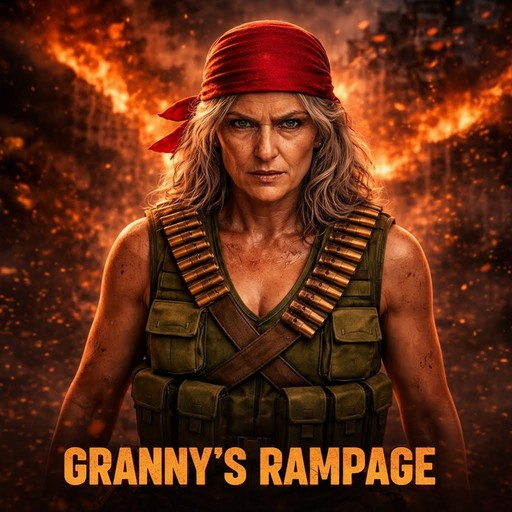
If both of these hook you and you want a third survivors-like with a strong creative identity, Granny's Rampage is worth a look. It sits closer to the Brotato end of the spectrum, with build-craft at its core and an Enrage mechanic at low health that turns the danger zone into a gamble.
If both of these hook you and you want a third survivors-like with a strong creative identity, Granny's Rampage is worth a look. It sits closer to the Brotato end of the spectrum, with build-craft at its core, but adds an Enrage mechanic at low health that turns the danger zone into a gamble. A gun-toting grandmother against five stages of demonic suburbia, it landed on Steam on June 22, 2026, is already on Android, and carries zero microtransactions.
Vampire Survivors versus Brotato is one of the most common questions in the genre, and the answer is genuinely about you rather than about which game is better. Positioning or building. Relaxing or optimizing. Comfort food or strategic depth. Both are excellent, both are cheap, and you will almost certainly end up with both. Pick the one whose pleasure sounds louder tonight, and enjoy the run.
Frequently Asked Questions
Which is better, Vampire Survivors or Brotato?
Neither is objectively better. Vampire Survivors is the more relaxing, positioning-focused experience with sprawling content and auto-firing weapons. Brotato is the more strategic, optimization-focused option with shop phases and deeper build-craft. Most genre fans end up owning both since they cost only a few dollars each.
Is Brotato harder than Vampire Survivors?
Yes, Brotato is more immediately demanding. It puts difficulty front and center through a danger-level system that scales as you improve. Vampire Survivors is gentle by default and hides its challenge behind optional modes you unlock later, making it the more relaxing entry point for newcomers.
Should I buy Vampire Survivors or Brotato first?
If you are new to survivors-likes, buy Vampire Survivors first for its gentler introduction and slightly lower price. If you already love roguelite optimization and synergy-hunting, start with Brotato for its deeper strategic demands. Either way, both cost about the same as a sandwich and deliver hundreds of hours.
What is the difference between Vampire Survivors and Brotato gameplay?
Vampire Survivors features auto-firing weapons with continuous 30-minute runs where positioning through enemy hordes is the core skill. Brotato uses shorter wave-based runs with a shop between each wave, where optimizing weapon and item synergies across up to six weapon slots is the core skill.