History of Roguelike Games: From ASCII Dungeons to Bullet Heaven
The history of roguelike games, from Rogue in 1980 to Hades, Slay the Spire, and Vampire Survivors, tracing how a niche genre conquered gaming.
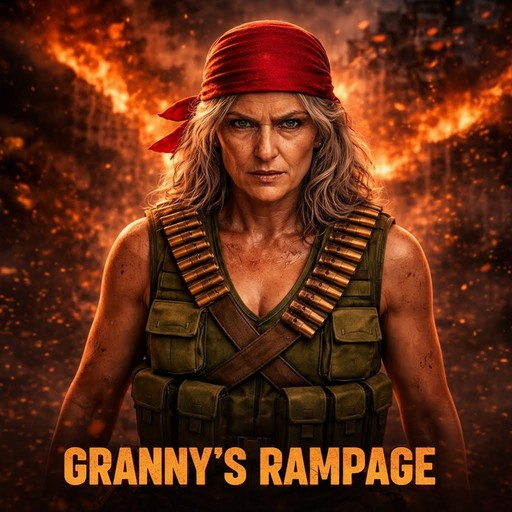
We make roguelike-adjacent games. Granny's Rampage is a bullet heaven with run-based progression. Granny's Gambit is a roguelike deckbuilder. Understanding the genre's history helps us understand what we're building on, and it's a genuinely fascinating story of a niche format that gradually consumed the entire industry.
What was the first roguelike game?
Rogue (1980) was the first roguelike game. Created for Unix mainframes by Michael Toy, Glenn Wichman, and Ken Arnold, it introduced procedurally generated dungeons, permadeath, turn-based combat, and ASCII graphics. Every run was unique, and it spawned an entire genre of games that followed its template.
Rogue was a dungeon crawler made for Unix mainframes by Michael Toy, Glenn Wichman, and Ken Arnold. It had procedurally generated levels, permadeath, turn-based combat, and ASCII graphics (the @ symbol was your character, letters represented monsters). Every playthrough was different because the dungeon was randomly generated each time.
Rogue was popular enough in university computer labs to spawn an entire family of games, collectively called "roguelikes." These games followed Rogue's template: procedural levels, permadeath, turn-based, grid-based, deep systems.
What are the classic roguelike games?
The classic roguelikes from the 1980s through 2000s include Nethack (1987), Angband (1990), ADOM (1994), and Dungeon Crawl Stone Soup (2006). These games followed Rogue's formula of grid-based, turn-based, permadeath dungeon crawling while adding progressively deeper system interactions and world design.
Nethack (1987), the most famous classic roguelike. Absurdly deep, you can dip a longsword into a potion to change its properties, kick down doors, pet cats that grow into large cats that fight for you. The depth of system interaction is unmatched to this day.
Angband (1990), Tolkien-themed roguelike with 100 dungeon levels. More straightforward than Nethack but massive.
ADOM (Ancient Domains of Mystery, 1994), added overworld exploration to the roguelike formula. Not just a dungeon, an entire world.
Dungeon Crawl Stone Soup (2006), streamlined classic roguelike design. Removed tedious elements while keeping tactical depth. Still actively developed and played.
These games shared common traits that the "Berlin Interpretation" (2008) attempted to codify: grid-based movement, turn-based combat, procedural generation, permadeath, hack-and-slash combat, exploration, resource management, complexity, and non-modal (the entire game takes place on one screen type).
What is the difference between roguelike and roguelite?
Roguelites borrow core roguelike elements (procedural generation, permadeath, emergent builds) without following the strict traditional template of grid-based, turn-based gameplay. The term emerged around 2008-2015 when Spelunky, The Binding of Isaac, and FTL proved roguelike design philosophy worked brilliantly in real-time action, shooters, and strategy games.
The rigid "Berlin Interpretation" definition started breaking down when indie developers began borrowing roguelike elements without following the full template.
Spelunky (2008/2012), procedurally generated 2D platformer with permadeath. Not turn-based, not grid-based, not ASCII. But the core philosophy, different every time, death resets everything, was unmistakably roguelike. Derek Yu proved the concept worked in real-time action.
The Binding of Isaac (2011), Edmund McMillen (Super Meat Boy) created a twin-stick shooter with procedural levels, permadeath, and item synergies that created emergent builds. Thousands of item combinations ensured no two runs were identical. Isaac proved roguelike mechanics could sustain enormous replayability.
FTL: Faster Than Light (2012), roguelike spaceship management. Procedural galaxy, permadeath, emergent stories from random encounters. Proved the format worked beyond dungeon crawling.
Risk of Rain (2013), real-time roguelike action platformer. Time-based difficulty scaling meant every second of indecision made enemies stronger.
The term "roguelite" emerged to describe these games, roguelike-inspired but not following the strict traditional template. The community argued about terminology. The games kept selling millions.
What are the best modern roguelike games?
The modern roguelike golden age (2015 to present) produced genre-defining titles: Enter the Gungeon, Dead Cells, Slay the Spire, Hades, Returnal, Vampire Survivors, and Balatro. Each combined roguelike mechanics with another genre, proving procedural permadeath design works in bullet hells, metroidvanias, deckbuilders, narrative action games, and beyond.
Enter the Gungeon (2016), bullet-hell roguelike. Hundreds of guns, tight dodge-rolling, secret characters and levels. Proved the format supported bullet-hell precision.
Dead Cells (2017/2018), metroidvania roguelike. Procedural levels with permanent ability unlocks that opened new routes. Combined two beloved genres. The games like Dead Cells post has more.
Slay the Spire (2017/2019), deckbuilder roguelike. Four characters, hundreds of cards, relics that transformed builds. Created an entire subgenre, "roguelike deckbuilder" didn't exist before Slay the Spire. Now there are dozens. The slay the spire best cards post has more.
Hades (2018/2020), Supergiant Games' narrative roguelike. The breakthrough: making death a narrative mechanic rather than a reset. Zagreus returns to the House of Hades after each death, relationships develop, the story progresses. Hades proved roguelikes could have deep, authored narratives. Game of the Year. The hades best builds post has more.
Returnal (2021), AAA roguelike. Sony published a $70 permadeath third-person shooter. The format went mainstream.
Vampire Survivors (2022), the bullet heaven revolution. One developer, $3 price point, auto-attacking characters, 30-minute runs. poncle stripped roguelike mechanics to their absolute essence: pick upgrades, survive waves, build power. Sold millions. Created the "survivors-like" subgenre. Dozens of games followed. Our own Granny's Rampage exists because Vampire Survivors proved the format. The games like Vampire Survivors post has more.
Balatro (2024), poker roguelike. Proved the deckbuilder roguelike subgenre had room for radical reinvention. Not cards-as-attacks like Slay the Spire, cards-as-poker-hands with modifier jokers.
What genres have roguelike mechanics in 2026?
By 2026, roguelike mechanics have infiltrated nearly every gaming genre. Procedural generation and permadeath act as a universal connector, adding replayability and emergent narrative to shooters, ARPGs, deckbuilders, survival games, city builders, metroidvanias, bullet heavens, and even AAA titles.
Roguelike mechanics have infiltrated every genre:
| Genre Combo | Notable Games |
|---|---|
| Roguelike + FPS | Roboquest, Gunfire Reborn |
| Roguelike + ARPG | Hades, Curse of the Dead Gods |
| Roguelike + Deckbuilder | Slay the Spire, Balatro, Inscryption |
| Roguelike + Survival | Don't Starve |
| Roguelike + City builder | Against the Storm |
| Roguelike + Metroidvania | Dead Cells |
| Roguelike + Bullet heaven | Vampire Survivors, Granny's Rampage |
| AAA Roguelike | Returnal, Deathloop |
The format turned out to be a universal connector, procedural generation and permadeath enhance any genre by adding replayability and emergent narrative.
What makes roguelikes so replayable?
The design principle connecting every roguelike from Rogue (1980) to Hades II (2025) is emergence through systems interaction. Roguelikes are endlessly replayable because their layered mechanics generate combinations and synergies the developer enabled but never explicitly prescribed, making each run a unique discovery.
From Rogue in 1980 to Hades II in 2025, one design principle connects every roguelike: emergence through systems interaction. Roguelikes are fascinating not because any individual run is handcrafted, but because the systems interact in ways the developer didn't explicitly design. Isaac's item synergies, Slay the Spire's card combos, Vampire Survivors' weapon evolutions, the player discovers interactions the designer enabled but didn't prescribe.
That's what makes roguelikes endlessly replayable: the game is smarter than any individual designer because the systems generate complexity beyond what any human could manually create.
For more roguelike content, the best roguelike games, what is a metroidvania, and most influential video games posts have more.
The shortest version
The full roguelike timeline spans 46 years: Rogue (1980) invented the formula, classic roguelikes deepened it, the roguelite revolution (2008-2015) proved it worked in any genre, and the modern golden age (2017 onward) took it mainstream with Hades, Vampire Survivors, and Balatro leading the charge.
1980: Rogue invents procedural dungeons with permadeath. 1987-2006: Nethack and classic roguelikes add depth. 2008-2015: Spelunky, Isaac, and FTL prove roguelike mechanics work in any genre ("roguelite" is born). 2017-2020: Slay the Spire creates deckbuilder roguelikes, Hades adds narrative, the format goes mainstream. 2022-present: Vampire Survivors strips the format to its essence, Balatro reinvents deckbuilders, roguelike mechanics infiltrate every genre. The format has been evolving for 46 years and shows no signs of slowing down.
Frequently Asked Questions
What was the first roguelike game?
Rogue (1980) was the first roguelike game. Created by Michael Toy, Glenn Wichman, and Ken Arnold for Unix mainframes, it introduced procedurally generated dungeons, permadeath, turn-based combat, and ASCII graphics. It was popular enough in university computer labs to spawn an entire genre of games that followed its design template.
What is the difference between roguelike and roguelite?
Traditional roguelikes follow the strict Berlin Interpretation: grid-based, turn-based, permadeath, procedural generation. Roguelites borrow core roguelike elements (procedural runs, permadeath, emergent builds) but apply them to other genres like platformers, shooters, or deckbuilders. The term emerged around 2008-2015 with games like Spelunky, The Binding of Isaac, and FTL.
What are the best modern roguelike games?
The most acclaimed modern roguelikes include Hades (narrative action), Slay the Spire (deckbuilder), Dead Cells (metroidvania), Vampire Survivors (bullet heaven), Balatro (poker deckbuilder), Enter the Gungeon (bullet hell), and Returnal (AAA third-person shooter). Each combines roguelike mechanics with another genre for massive replayability.
What is a bullet heaven game?
Bullet heaven (also called survivors-like) is a roguelike subgenre popularized by Vampire Survivors (2022). Players control auto-attacking characters, pick upgrades between waves, and survive increasingly dense enemy hordes during short 30-minute runs. The format strips roguelike mechanics to their essence: build power through layered upgrade choices and survive.