Saros Is in Trouble and It Says Something About Where Roguelites Actually Belong
Saros got 87 on OpenCritic and reportedly recouped 30% of its $76M budget in two weeks. The story isn't really about Saros, it's about whether AAA roguelites work at all.
Housemarque's Saros launched April 30, 2026 as Sony's first big PS5 exclusive of the year. It received an OpenCritic score of 87, drew comparisons to its predecessor Returnal in every major review, and was positioned by Sony as a flagship release. Two weeks later, the early sales numbers are not great.
Per Rhys Elliott of Alinea Analytics, Saros has sold roughly 300,000 copies, generating just over $22 million in revenue against a reported $76 million development budget. About 30% of its costs recouped after two weeks. The April PS Store charts placed it 11th in North America and 17th in Europe, well below where Sony exclusives typically debut. The UK physical chart had it in third behind Tomodachi Life and Cyberpunk 2077 Ultimate Edition.
The interesting wrinkle is that Saros is actually selling slower than Returnal did, despite launching into a PS5 install base that is eleven times larger than the one Returnal launched into. Almost 80% of Saros buyers previously played Returnal. About a third of total Saros sales came during the 48-hour early access window. The audience showing up is the Housemarque core, not the broader PS5 audience Sony hoped to convert.
This is a meaningful story for the broader roguelite genre. Saros's commercial struggles are not really about Saros being a bad game. The reviews are glowing. The community feedback from players who actually bought it is overwhelmingly positive. The game is, by all accounts, excellent. The struggle is about whether the roguelite formula actually scales to AAA budgets and AAA price points, or whether the genre fundamentally belongs to indie scale.
The Saros launch landed in a particularly crowded market window. April 2026 had MLB The Show 26, EA Sports FC 26, Crimson Desert, Pragmata, and Starfield all dominating the PS Store charts. Casual PlayStation owners chose their one or two big purchases for the month, and Saros was rarely in the top two for households that were not already invested in the Housemarque catalog. Commercial release windows matter, and Sony's calendar for Saros has not been kind.
How Much Did Saros Cost to Make?
Saros reportedly cost $76 million to develop, roughly half a typical AAA narrative title but more than ten times the budget of most successful indie roguelites. At $70 per copy, Housemarque needs to sell about a million units to break even, a threshold the roguelite genre has rarely cleared at launch.
The $76 million budget figure deserves attention. That is roughly half of what a typical AAA narrative title costs, but more than ten times what a successful indie roguelite costs. Hades reportedly cost Supergiant somewhere in the single-digit millions. Vampire Survivors was built by one person for essentially nothing. Balatro similarly. The indie roguelite economics work because the production costs are modest enough that a few hundred thousand copies at $20 puts the game in the black.
| Game | Estimated Budget | Price Point | What It Takes to Break Even |
|---|---|---|---|
| Saros | $76 million | $70 | ~1 million copies |
| Hades | Single-digit millions | $25 | A few hundred thousand copies |
| Vampire Survivors | Near zero | $5 | Minimal |
| Balatro | Near zero | $15 | Minimal |
Saros needs to sell roughly a million copies at $70 to break even. That math has historically been challenging for roguelites because the audience for $70 single-player run-based games is structurally smaller than the audience for $20 indie versions of the same format. Returnal eventually got there over years through word of mouth, PS Plus inclusion, and a delayed PC port. Saros is reportedly staying PS5 exclusive, which removes one of the lifelines Returnal had.
The genre's commercial sweet spot has always been the $15 to $25 range. That is where Vampire Survivors prints money, where Hades made its reputation, where Dead Cells continues to sell. The AAA versions of the genre exist mostly as proof-of-concept that the format can work at scale, not because the economics consistently favor it. Returnal pulled it off. Saros is testing whether it can be done twice.
The other consideration is that Saros's audience overlap data tells a specific story. About 78% of buyers previously played Returnal. Around 56% played Ghost of Yotei. Around 37% played Death Stranding 2. The buyers are the PlayStation hardcore, not the broader audience Sony hoped to reach. This is a structural problem rather than a marketing problem. The game is reaching the people inclined to want it. The people who do not currently want a $70 PS5 exclusive roguelite are not going to be convinced by more marketing.
The historical comparison points are unflattering. Returnal sold 866,000 copies in a similar timeframe with an install base 11x smaller than Saros's launch window. The PS5 has dramatically more potential customers now, and Saros is reaching fewer of them in absolute terms. This is not a sign that the audience has shrunk. It is a sign that the audience never expanded to the size Sony assumed when they greenlit a $76 million roguelite.
How Are Indie Roguelites Performing in 2026?
Indie roguelites are having their strongest year yet. Slay the Spire 2 sold over five million copies in its first month of Early Access, Mewgenics earned Overwhelmingly Positive Steam reviews, and Vampire Survivors continues growing. The genre is expanding rapidly at indie scale, with small teams and affordable price points driving massive commercial success.
While Saros struggles to recoup $76 million, the indie side of the genre is having its strongest year in memory. Slay the Spire 2 launched into Early Access in March and reportedly sold over five million copies in its first month, despite a Mostly Negative review aggregate that has been the subject of significant community discussion. Mewgenics from Edmund McMillen launched in February to Overwhelmingly Positive Steam reviews. MENACE from the Battle Brothers team hit Very Positive in three weeks. Vampire Survivors continues to add content and players.
The numbers tell a clear story. The indie roguelite category is selling at scales that would have been impossible five years ago, at price points that make the unit economics genuinely favorable for the studios producing them. The genre's expansion is happening in the indie tier, not the AAA tier.
Our breakdown of the best roguelite deckbuilders in 2026 covers the current state of one of the genre's most successful sub-categories. The pattern is the same across most roguelite sub-genres. Small teams ship distinctive games at affordable prices and find their audiences. The model works.
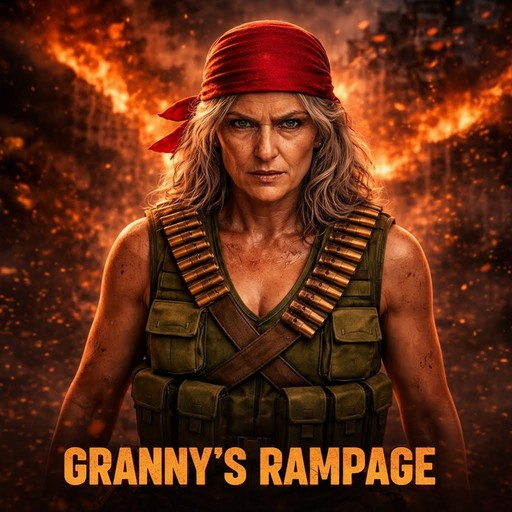
Even at the smallest end of the genre, the economics are friendlier than at AAA scale. Granny's Rampage is a one-person bullet heaven shipping on multiple platforms, with a launched on Steam June 22 at indie pricing. It does not need to clear million-unit sales to be a success. Its existence is structurally possible at a scale that Saros, with its $76 million budget, simply cannot operate at.
Why Don't Roguelites Work at AAA Budgets?
Roguelites generate depth through procedural systems and run-based loops, not through handcrafted content. Extra budget adds visual polish and narrative wrapping, but it does not proportionally increase the gameplay depth players value most. That mismatch makes it difficult to justify a $70 price when the core loop feels comparable to a $20 indie offering.
There is a structural reason why roguelites might fundamentally resist AAA budget levels. The genre's core appeal is replayability through procedural systems, not handcrafted content depth. Adding more budget to a roguelite primarily adds visual polish, audio production, and narrative wrapping. It does not necessarily add proportionally more gameplay depth, because the gameplay depth is generated by the systems rather than the content.
Compare this to a narrative AAA game like God of War. The budget goes into level design, cutscene production, performance capture, voice acting. Each dollar adds detectable content. A player buying God of War for $70 receives a comparable amount of content to a player buying the same priced narrative game from the previous generation, but better-produced.
A player buying Saros for $70 receives... a roguelite. The procedural systems generate replayability that would have been comparable in a $20 indie version of the same game. The visual polish is genuinely beautiful, but visual polish is not what people play roguelites for. They play them for the loop. The loop in Saros is excellent. It is also a loop that does not obviously justify $70 to most consumers.
This is why Returnal struggled at launch and Saros is struggling now. The price point asks players to commit AAA budget for indie-genre experience. Some players, including most Housemarque fans, are willing to make that trade. Most players are not.
How Does Saros Compare to Hades 2 and Other Premium Roguelites?
Hades 2 launched at $30 on every platform and has performed extraordinarily well, while Saros launched at $70 as a PS5 exclusive and is struggling commercially. Both are sequels to acclaimed roguelites, but Supergiant priced Hades 2 where the genre's audience is comfortable. Sony priced Saros where the AAA market lives, and the mismatch shows.
Hades 2 released in September 2025 as a $30 game and has been performing extraordinarily well. The same studio behind one of the genre's defining works decided to price the sequel at a premium-but-not-AAA tier, and the commercial response has been strong. Supergiant chose a price point that respects the genre's economics rather than fighting them.
The contrast with Saros is instructive. Same broad genre. Both are sequels to acclaimed predecessors. Hades 2 is priced at $30. Saros is priced at $70. Hades 2 is on every platform. Saros is PS5 exclusive. The structural decisions Sony made for Saros are working against it commercially, regardless of how good the game itself is.
| Factor | Hades 2 | Saros |
|---|---|---|
| Genre | Roguelite (action) | Roguelite (third-person shooter) |
| Sequel to | Hades (acclaimed) | Returnal (acclaimed) |
| Price | $30 | $70 |
| Platforms | Every major platform | PS5 exclusive |
| Commercial result | Strong sales | Struggling to recoup budget |
Our Hades 2 weapon tier list covers what makes the sequel work mechanically, but the commercial framing matters too. Supergiant priced the game where the genre's audience is comfortable. Sony priced Saros where the AAA market lives, and the genre's audience does not always live there.
What Happens to Housemarque After Saros?
Housemarque faces real financial pressure after Saros recouped only about 30% of its $76 million budget in two weeks. Sony has recently shut down first-party studios like Bluepoint Games and taken impairment losses on Bungie, establishing a pattern that has fans worried. Whether Housemarque survives likely depends on Saros's long-tail sales, potential PS Plus inclusion, and Sony's patience.
The unspoken concern around Saros's slow start is what it means for Housemarque as a studio. Sony shut down Bluepoint Games in March 2026 after years of acclaimed remake work. The pattern of Sony absorbing studios and then closing them is now established enough that fans are openly worried about Housemarque's future.
The financial pressure is real. Sony took an impairment loss on Bungie recently after Marathon's underperformance. The company has been culling first-party studios that do not produce reliable hits. A $76 million game that recoups only 30% of its budget in two weeks fits the pattern of titles that have triggered cuts elsewhere.
Whether Housemarque survives depends on Saros's long tail, which Returnal proved can be substantial. Sales typically build slowly for these games. The PC port question, the PS Plus inclusion question, the eventual price drops all matter. Sony has shown patience with Housemarque before. Whether they show patience again will depend on factors beyond the game's quality.
The Genre's Center of Gravity
The roguelite genre is fundamentally an indie category that occasionally produces AAA experiments. Games like Vampire Survivors, Balatro, and Hades thrive because small teams with creative freedom and modest budgets can ship distinctive experiences at prices the genre's audience expects. AAA roguelites can work mechanically, but they consistently struggle to justify their price tags commercially.
The Saros story crystallizes something the roguelite genre has been demonstrating for years. The category is fundamentally an indie genre that occasionally produces AAA experiments. The experiments succeed mechanically but struggle commercially because the genre's audience expects indie pricing for the format they recognize.
This is not a bad thing. The genre's indie center of gravity is precisely what has kept it healthy and experimental. Vampire Survivors could not have been built at AAA scale. Balatro could not have been pitched to a major publisher. Hades only worked because Supergiant had built up enough independence to fund it themselves. The format thrives in small teams with creative latitude and modest budget pressure.
The question Sony is wrestling with after Saros is whether AAA roguelites are worth funding at all. The answer might be yes, if you accept that they will be slow burns with modest opening sales and long tails. The answer might be no, if you need every $76 million investment to deliver Spider-Man numbers.
Either way, the smaller end of the genre is doing genuinely well. The next twelve months will probably produce another half dozen excellent indie roguelites that significantly outperform their budgets. Saros is a beautiful game. The genre's commercial energy is happening elsewhere.
The other lesson Sony might consider is platform exclusivity. Returnal eventually came to PC about two years after launch, and the PC port noticeably extended the commercial tail. Saros reportedly staying PS5 exclusive removes that lifeline entirely. A roguelite is a genre format that benefits from broad platform availability because the audience is distributed across PC, console, mobile, and handheld in ways that AAA narrative games are not. By restricting Saros to one platform, Sony has structurally limited the game's commercial ceiling regardless of how good word of mouth gets.
For the broader landscape of roguelite power fantasy games that scale well at indie prices, the field is wide open right now. The genre is in great shape. It is just not necessarily in great shape at $70.
Frequently Asked Questions
Why is Saros selling poorly despite great reviews?
Saros's struggles are structural, not quality-related. Its $70 price and PS5 exclusivity put it at odds with how most players buy roguelites. The genre's audience is used to $15 to $25 indie pricing, and almost 80% of Saros buyers already played Returnal, showing the game is only reaching the existing Housemarque core rather than converting new players.
How much did Saros cost to develop and how many copies has it sold?
Saros had a reported development budget of $76 million. In its first two weeks it sold roughly 300,000 copies, generating just over $22 million in revenue. That means about 30% of its budget has been recouped so far. It needs approximately one million copies sold at $70 to break even.
What are the best-selling roguelites in 2026?
On the indie side, Slay the Spire 2 sold over five million copies in its first month of Early Access. Mewgenics launched to Overwhelmingly Positive Steam reviews, MENACE hit Very Positive within three weeks, and Vampire Survivors continues to grow. Hades 2 at $30 has also performed extremely well across all platforms.
Will Housemarque get shut down by Sony after Saros?
There is real concern given Sony's recent pattern of closing first-party studios like Bluepoint Games and taking losses on Bungie. However, Housemarque's future likely depends on Saros's long-tail performance. Returnal proved these games can build sales over years through word of mouth, PS Plus inclusion, and price drops.