
What Makes a Good Boss Fight: A Developer's Design Breakdown
What makes a good boss fight, the design principles behind gaming's greatest bosses, analyzed by a studio that builds them.
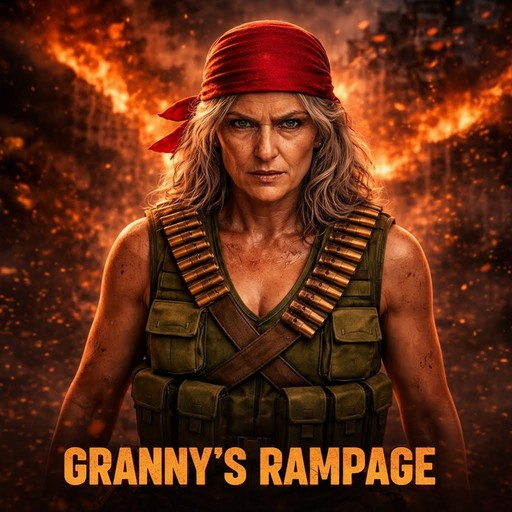
We build boss fights. Granny's Rampage has boss encounters at the end of each stage, and designing them taught us more about game design than anything else we've built. A boss fight is a conversation between designer and player, and like any conversation, it works when both sides are communicating clearly. Here's what we've learned from studying the best.
Why is attack readability important in boss fight design?
A good boss fight telegraphs every attack so the player can read the windup, understand the timing, and react. Readable attacks are what separate fair difficulty from cheap deaths. If a player can watch their death replay and immediately spot what they should have done differently, the telegraph is working as intended.
Every attack must be telegraphed. The player must see the windup, understand the timing, and have a window to respond. This is the non-negotiable foundation of every good boss fight.
Good telegraphs: Malenia's Waterfowl Dance (Elden Ring) has a distinct windup animation. She leaps into the air and pauses before the slash combo begins. The telegraph is fast but it's there. Players who learn to recognize it can dodge. Players who don't, die. The hardest bosses in gaming post covers more examples.
Bad telegraphs: Bed of Chaos (Dark Souls) kills you with floor collapses that have no consistent visual tell. You die and don't know what you could have done differently. That's not difficulty; it's poor communication.
The test: If a player watches their death replay and says "oh, I see what I should have done," the telegraph worked. If they say "how was I supposed to know that?" it didn't.
How does rhythm make a boss fight feel great?
Boss fight rhythm is the cycle of attack windows, punish windows, and recovery windows that players learn to feel instinctively. Games like Sekiro and Cuphead build entire combat systems around rhythmic patterns, making each fight feel like a musical duet between player and boss that escalates in tempo across phases.
Boss fights have rhythm: attack windows, punish windows, recovery windows. The best bosses create a rhythm that the player learns to feel rather than think about.
Sekiro's entire combat system is built on rhythm. Parrying creates a musical back-and-forth between player and boss. The posture system rewards staying in rhythm rather than retreating to heal. When Sekiro's combat clicks, it feels like a duet.
Cuphead's bosses are rhythm games disguised as action games. Each phase has a pattern, and mastering the pattern feels like learning a song. The hand-drawn animation reinforces this; each attack has a visual beat.
The principle: Players should feel the fight's tempo increasing across phases. Phase 1 is the verse. Phase 2 is the chorus. Phase 3 is the bridge. The difficulty curves like a musical crescendo.
What makes a boss fight feel fair?
A fair boss fight gives the player all the tools and information needed to survive every attack. Every death should feel earned, the result of a player's mistake rather than the designer withholding information. If playtesters say "I almost had it" after dying instead of "that was unfair," the design is working.
Every death should feel earned. The player should always have the tools and information to survive. A boss that kills through mechanics the player hasn't seen or can't respond to isn't hard; it's unfair.
Fair difficulty examples: Hollow Knight's Grimm. Every attack has a clear animation, a consistent speed, and a dodge window. The fight is hard because the player must execute perfectly, not because the game withholds information.
Unfair difficulty examples: bosses with random instant-kill moves, bosses that spawn during loading screens, bosses in arenas too small to dodge.
From our experience: When playtesting Granny's Rampage bosses, if a playtester dies and says "that was BS," we change the boss. If they die and say "I almost had it," the design is working.
Why do boss fights need phases and escalation?
Boss fights need multiple phases to keep players engaged and test their skills in new ways as the fight progresses. A boss that behaves identically from full HP to zero is boring no matter how complex its mechanics are. The best fights subvert or expand on patterns the player learned in earlier phases.
Boss fights need phases. A boss that behaves identically from 100% HP to 0% HP is boring regardless of mechanical complexity. The player's understanding should be tested in new ways as the fight progresses.
Phase transitions done well: Isshin (Sekiro) starts as an old man with a sword, then pulls out a spear, then adds lightning. Each phase demands different skills. The best soulslike games post covers Sekiro specifically.
Phase transitions done simply: Sans (Undertale) starts with normal bullet patterns and progressively introduces more complex ones. The escalation is gradual rather than discrete but equally effective.
The minimum: Two phases with distinct behaviors. The pattern the player learned in phase 1 should be subverted or expanded in phase 2.
What makes beating a boss feel rewarding?
Defeating a boss feels rewarding when the emotional payoff matches the struggle. The best boss victories combine mechanical rewards (drops, abilities, progression unlocks) with emotional rewards (music shifts, cutscenes, world changes). If a player beats a boss and feels nothing, the fight lacked sufficient challenge or payoff.
Winning should feel earned. The emotional payoff of defeating a hard boss is proportional to the struggle required to beat it. This is why Malenia's defeat feels better than most bosses: the 50 deaths that preceded victory make the success meaningful.
Mechanical rewards: Drops, abilities, currency, progression gates unlocked. These are necessary but not sufficient.
Emotional rewards: Music changes, cutscene quality, character reactions, environmental changes. The best bosses make the world feel different after they're defeated.
The hollow victory test: If a player beats a boss and feels nothing, the fight lacked either sufficient challenge or sufficient narrative/mechanical payoff. Both contribute to satisfaction.
What we apply to our own games
Every boss in Granny's Rampage is built on these five design pillars: readability, rhythm, fairness, escalation, and reward. Each boss features readable attack patterns, escalating phases, and meaningful drops that change Granny's arsenal, drawing from lessons learned studying Hollow Knight, Hades, and Cuphead.
Building bosses for Granny's Rampage follows these exact principles. Each boss has readable attack patterns, escalating phases, and rewards that meaningfully change Granny's arsenal. The boss fights are where our game design philosophy is most visible. Everything we've learned from studying Hollow Knight, Hades, and Cuphead goes into making our bosses feel fair, challenging, and satisfying to defeat.
For more game design content, the most influential video games, best video game villains, and how dark souls changed gaming posts have more.
The shortest version
These five principles form the foundation of every great boss encounter. Readability, rhythm, fairness, escalation, and reward work together to create fights where the player feels challenged but never cheated. A great boss fight is a conversation: the designer asks "can you handle this?" and the player answers.
| Principle | What It Means |
|---|---|
| Readability | Every attack is telegraphed |
| Rhythm | The fight has a tempo that escalates |
| Fairness | Every death is the player's mistake, not the designer's |
| Escalation | Phases introduce new challenges |
| Reward | Victory feels earned through both mechanical drops and emotional payoff |
The best boss fight is a conversation: the designer says "can you handle this?" and the player answers.
Frequently Asked Questions
What makes a good boss fight in a video game?
A good boss fight is built on five core design principles: readability (every attack is telegraphed), rhythm (the fight has an escalating tempo), fairness (every death feels earned), escalation (phases introduce new challenges), and reward (victory pays off through drops and emotional impact).
What is the difference between fair and unfair boss difficulty?
Fair difficulty means the player always has the tools and information to survive, like Hollow Knight's Grimm where every attack has a clear animation and dodge window. Unfair difficulty includes random instant-kill moves, bosses spawning during loading screens, or arenas too small to dodge in.
Why do boss fights need multiple phases?
Phases keep players engaged by testing their skills in new ways as the fight progresses. A boss that behaves the same from full HP to zero feels boring. Good phase design, like Isshin in Sekiro shifting from sword to spear to lightning, subverts or expands patterns the player learned earlier.
How do you know if a boss fight telegraph is working?
If a player watches their death replay and says 'oh, I see what I should have done,' the telegraph worked. If they say 'how was I supposed to know that?' it failed. The player must be able to see the windup, understand the timing, and have a window to respond.