
The Best Pixel Art Games That Prove Pixels Age Better Than Polygons
The best pixel art games, indie games that use pixel art not as a limitation but as a deliberate aesthetic choice that makes them timeless.
Pixel art in indie games isn't a budget compromise. It's a deliberate aesthetic choice that ages better than photorealism ever will. A PS3 game from 2008 looks dated. A pixel art game from 2008 looks exactly as good today as it did then. The abstraction is the feature, your brain fills in the details, which means the game looks as good as your imagination.
The games below aren't just good games with pixel art. They're games where the pixel art is integral to the experience.
What are the best atmospheric pixel art games?
The best atmospheric pixel art games are Celeste, Hyper Light Drifter, Eastward, and Katana ZERO. Each uses pixel art not just as a visual style but as a storytelling tool, conveying emotion, world-building, and narrative weight through color, animation, and environmental detail rather than dialogue or photorealistic rendering.
Celeste uses pixel art to tell a story about mental health that hits harder than most photorealistic narratives. The character sprites are small and expressive, the environments shift from warm to hostile to ethereal across chapters, and the visual language communicates emotion through color and movement rather than facial animation. Matt Thorson and the team at Extremely OK Games proved that pixel art can carry genuine dramatic weight.
Hyper Light Drifter is wordless, the entire story is told through pixel art environments, animations, and environmental storytelling. Heart Machine created a world that feels ancient, melancholy, and dangerous without a single line of dialogue. The combat is Zelda-meets-Dark-Souls demanding, and every screen is composition-worthy.
Eastward has some of the most detailed pixel art ever put in a game. Pixpil hand-animated environments with a density of detail that rewards slow exploration, kitchens have individual items on shelves, cities have market stalls with distinct products. The art direction elevates what could have been a standard action RPG into something visually memorable.
Katana ZERO uses pixel art for ultraviolent, neon-drenched action that plays like a playable action movie. The slowdown mechanics and one-hit-kill design create moments where a single pixel-art frame tells a complete story of violence and precision.
What are the best pixel art platformers?
The best pixel art platformers are Celeste, Shovel Knight, and Dead Cells. Pixel art excels in precision platformers because sprites deliver perfectly readable hitboxes and crystal-clear visual feedback. Every spike, wall, and enemy telegraph reads exactly as intended, which is critical when gameplay demands frame-perfect inputs.
Celeste belongs here too, the best platformer ever made uses pixel art because the precision demands readable, consistent hitboxes. Every spike, every wall, every platform is exactly where it looks like it is. That clarity is essential when you're making frame-perfect jumps in the B-side levels.
Shovel Knight is a love letter to NES-era aesthetics that exceeds its inspiration. Yacht Club Games imposed NES color palette limitations on themselves and still produced one of the most visually charming platformers ever made. The constraint forced creativity.
Dead Cells blends pixel art with modern lighting and particle effects. The character animations are fluid in a way that defies the medium's reputation for choppiness, and the roguelite combat reads perfectly because every enemy telegraph is visually clear.
What are the best pixel art RPGs?
The best pixel art RPGs are Undertale, Stardew Valley, and Omori. These games prove that pixel art can carry deep narrative and world-building just as effectively as high-fidelity 3D, using expressive sprites, handcrafted environments, and deliberate style shifts to create worlds players genuinely connect with on an emotional level.
Undertale uses deliberately simple pixel art that looks like it was made in MS Paint, and the intentional roughness is part of the charm. Toby Fox's narrative experiment works partly because the art doesn't try to be pretty, it tries to be expressive, and it succeeds completely.
Stardew Valley proved that one person's pixel art can create a world millions of people want to live in. Every crop, every season, every villager portrait, ConcernedApe drew it all himself, and the consistency of vision shows.
Omori uses multiple art styles, cheerful pixel art for the dream world, hand-drawn illustrations for emotional peaks, and distorted visuals for horror sequences. The style shifts mirror the psychological narrative, making the art itself a storytelling tool.
What are the best pixel art roguelikes?
The best pixel art roguelikes are Vampire Survivors and Spelunky 2. Both games highlight why pixel art is often the superior choice for chaotic, high-stakes gameplay. When hundreds of enemies, projectiles, or physics objects fill the screen at once, clean sprite-based visuals keep the action readable in ways that dense 3D rendering can struggle to match.
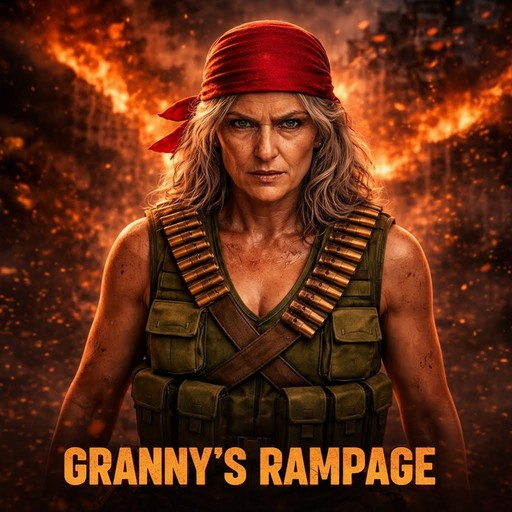
Vampire Survivors uses deliberately retro pixel art that looks like a mobile game from 2010. It shouldn't work. It works completely because the visual clarity means you can read the chaos of 500 enemies and 12 weapons firing simultaneously. The bullet heaven genre it spawned proves that pixel art isn't just viable for action games, it's often superior, because readability matters more than fidelity when the screen is full of projectiles. Granny's Rampage uses the same sprite-based approach for the same reason, when grandma's minigun is filling the screen with bullets, you need to see what's happening.
Spelunky 2 has pixel art that communicates complex physics interactions clearly. When a bomb explodes, rocks fall, lava flows, and enemies ragdoll, all in pixel art that reads instantly. The roguelike structure demands visual clarity because you're making split-second decisions about environmental hazards.
Why does pixel art age better than 3D graphics?
Pixel art endures because it solves three problems at once: it is achievable for solo developers who lack 3D art teams, it ages gracefully since it never attempted photorealism in the first place, and it provides visual clarity that complex 3D rendering sometimes sacrifices for spectacle. These strengths keep pixel art thriving across every genre.
Pixel art in indie games isn't going anywhere because it solves three problems simultaneously. It's achievable for solo developers who can't hire 3D artists. It ages gracefully because it was never trying to be photorealistic. And it provides visual clarity that complex 3D rendering sometimes sacrifices for spectacle.
The best pixel art games understand that the medium isn't a limitation, it's a language. And some things are said more clearly in pixels than in polygons.
Frequently Asked Questions
What are the best pixel art games of all time?
Some of the best pixel art games include Celeste, Hyper Light Drifter, Shovel Knight, Dead Cells, Undertale, Stardew Valley, Omori, Vampire Survivors, Spelunky 2, Eastward, and Katana ZERO. Each uses pixel art as an integral part of the experience rather than just a visual shortcut.
Why do pixel art games still look good years later?
Pixel art ages better than 3D graphics because it never attempted photorealism. The abstraction lets your brain fill in details, so the visuals hold up indefinitely. A PS3 game from 2008 looks dated, but a pixel art game from 2008 looks exactly as good today as it did at launch.
What pixel art games have the best atmosphere?
Hyper Light Drifter, Celeste, Eastward, and Katana ZERO are standout atmospheric pixel art games. Hyper Light Drifter tells its entire story wordlessly through environments. Celeste uses color shifts to convey emotion. Eastward features incredibly dense hand-animated detail, and Katana ZERO delivers neon-drenched, cinematic action.
Is pixel art better than 3D for indie games?
Pixel art offers major advantages for indie developers. It is achievable for solo devs without 3D art teams, it ages gracefully, and it provides superior visual clarity during chaotic gameplay. Games like Vampire Survivors prove that readability matters more than fidelity when hundreds of enemies fill the screen.